Introduction to Mundane Astrology
Mundane Astrology is the branch of astrology that focuses on world events rather than individual birth charts. The term “mundane” comes from the Latin word mundus, meaning “world.” This system studies planetary movements to predict or analyze events affecting nations, governments, economies, natural disasters, and global trends.
Instead of examining a person’s horoscope, Mundane Astrology looks at the charts of countries, leaders, and significant political moments. Historically, astrology first developed in a mundane form, as ancient astrologers were primarily concerned with predicting the fate of kings and kingdoms. Even today, this branch remains important for understanding collective energies and large-scale transformations.
Historical Origins and Development
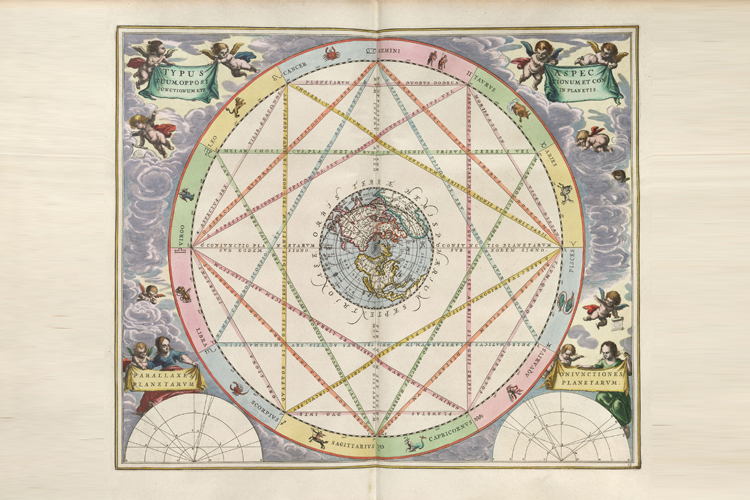
Mundane Astrology traces its origins back to ancient Mesopotamia, where astrologers observed planetary movements to predict wars, famines, and the rise or fall of rulers. Early Babylonian astrologers recorded eclipses and planetary alignments as omens for kings.
Later, Greek scholars refined these ideas, and astrologers such as Claudius Ptolemy included mundane principles in classical texts. During the medieval and Renaissance periods, astrologers were often employed by royal courts to advise rulers on political decisions and national concerns.
- Originated in Babylonian civilization
- Used to predict fate of kings
- Refined by Greek scholars
- Practiced in royal courts
Core Principles and Techniques
Mundane Astrology analyzes planetary transits, eclipses, conjunctions, and ingresses (when planets enter new zodiac signs). Special importance is given to major planetary alignments involving slow-moving planets like Saturn, Jupiter, Uranus, Neptune, and Pluto, as these are believed to influence long-term global trends.
Astrologers also create charts for significant national events such as independence days, constitutional signings, or leadership inaugurations. These charts are interpreted to understand a country’s strengths, challenges, and future cycles.
- Studies planetary transits and eclipses
- Focus on major conjunctions
- Analyzes long-term global cycles
- Uses national event charts
Areas of Influence
Mundane Astrology covers various areas including politics, economics, climate, and social movements. Planetary alignments may be studied to anticipate economic recessions, political revolutions, or shifts in global power.
Eclipses are often analyzed for their potential impact on natural disasters or sudden national events. Astrologers examine how celestial movements interact with a nation’s founding chart to assess periods of growth or crisis.
- Political changes and elections
- Economic trends and markets
- Natural disasters and climate events
- Social and cultural movements
Difference from Natal Astrology
Unlike Natal Astrology, which focuses on an individual’s birth chart and personal destiny, Mundane Astrology deals with collective experiences. The interpretation is broader and concerns entire populations rather than single personalities.
While Natal Astrology studies personality, relationships, and career, Mundane Astrology examines global cycles and national developments. Both branches use similar planetary principles, but their scope and application differ significantly.
- Natal astrology focuses on individuals
- Mundane astrology focuses on nations
- Concerned with collective destiny
- Uses similar planetary framework
Modern Relevance and Global Practice
In modern times, Mundane Astrology is used to analyze global events such as economic crises, geopolitical conflicts, and leadership changes. Some astrologers study planetary cycles to forecast long-term trends in technology, environment, and international relations.
With digital tools and global communication, Mundane Astrology has gained renewed interest among researchers and enthusiasts worldwide. Though debated in scientific circles, it remains influential in certain political and cultural communities.
- Applied to global and political analysis
- Used to study economic cycles
- Examines long-term planetary trends
- Accessible through modern software