Understanding Nadi Dosh in Astrology
Nadi Dosh is one of the most important factors considered in Vedic astrology during kundli matching for marriage. It arises when both individuals belong to the same Nadi category, which is believed to create an imbalance in the flow of energy between partners. In astrology, Nadi represents the pulse or life force, indicating genetic compatibility, health patterns, and the potential for progeny. When this energy alignment is disturbed, it may lead to misunderstandings, health concerns, or challenges in married life.
The concept of Nadi Dosh is deeply rooted in traditional beliefs, where the aim is to ensure harmony not just emotionally but also physically and spiritually between partners. It is given high importance, especially in arranged marriages, because it is thought to affect the long-term stability of the relationship. However, modern interpretations suggest that its effects can vary depending on other factors in the birth chart.
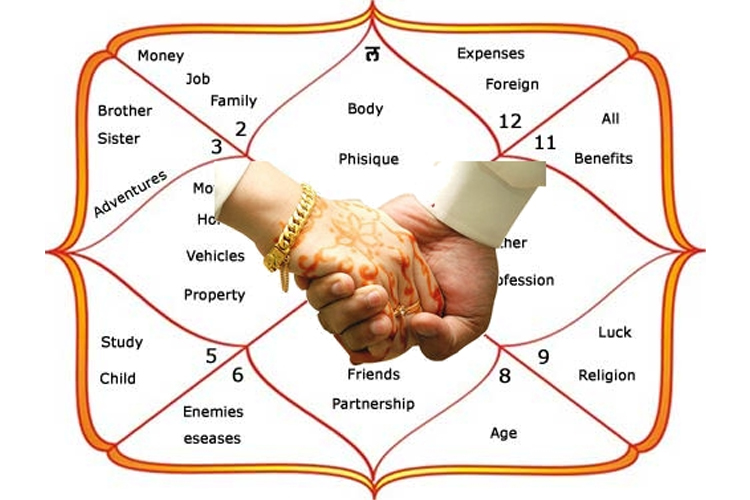
Types of Nadi and Their Significance
In astrology, there are three types of Nadi: Aadi (Vata), Madhya (Pitta), and Antya (Kapha). These classifications are based on ancient Ayurvedic principles and represent different body constitutions and energy patterns. Each Nadi type reflects a unique physiological and psychological nature. When two individuals share the same Nadi, it is believed that their energies may clash or become imbalanced, leading to potential issues in marriage.
The idea behind this classification is to maintain balance between partners. Just like in Ayurveda, where imbalance in doshas can lead to health issues, a similar concept is applied in relationships. Matching different Nadis is thought to create harmony, while the same Nadi may result in conflicts or lack of compatibility.
Understanding the type of Nadi in your horoscope helps in evaluating the depth of compatibility and identifying possible challenges before marriage.
- Aadi Nadi: Associated with Vata (movement, creativity)
- Madhya Nadi: Associated with Pitta (energy, passion)
- Antya Nadi: Associated with Kapha (stability, calmness)
- Same Nadi pairing leads to Nadi Dosh
Effects of Nadi Dosh on Marriage
Nadi Dosh is often associated with various challenges in married life, especially when it is not canceled or balanced by other astrological factors. It is believed to affect emotional bonding, physical compatibility, and overall harmony between partners. In some cases, it may also be linked to issues related to childbirth or health concerns within the family.
However, it is important to understand that not all cases of Nadi Dosh lead to negative outcomes. The severity of its effects depends on the overall strength of the horoscope, including planetary positions, aspects, and other matching factors. A strong and supportive chart can reduce or completely neutralize the impact of Nadi Dosh.
Modern astrologers often emphasize a holistic approach rather than focusing solely on one dosh, ensuring that decisions are balanced and practical.
- May cause misunderstandings or conflicts
- Linked to health and progeny concerns
- Impact depends on overall horoscope strength
- Not always harmful if properly analyzed
Conditions for Nadi Dosh Cancellation
One of the most important aspects of Nadi Dosh is that it can often be canceled under certain conditions. Astrology provides several exceptions where the presence of Nadi Dosh does not negatively affect the marriage. For example, if both partners have the same zodiac sign but different nakshatras, or if the ruling planets of their nakshatras are compatible, the dosh may be nullified.
Additionally, if the overall guna matching score is high or if other compatibility factors are strong, the negative effects of Nadi Dosh can be minimized. In many cases, planetary positions such as a strong Jupiter or Venus can also reduce its impact significantly.
Understanding these cancellation rules is crucial, as it prevents unnecessary fear and helps individuals make informed decisions based on a complete analysis rather than a single factor.
- Same sign but different nakshatra can cancel dosh
- Strong planetary support reduces impact
- High guna matching minimizes effects
- Expert analysis is essential for confirmation
Remedies for Nadi Dosh
Astrology offers various remedies to reduce or eliminate the negative effects of Nadi Dosh. These remedies are based on traditional practices aimed at balancing planetary energies and improving compatibility between partners. Rituals such as Nadi Dosh Nivaran Puja are commonly performed before marriage to neutralize its effects.
Other remedies may include chanting specific mantras, performing charity, or seeking blessings from elders and spiritual guides. In some traditions, symbolic marriages (like marrying a tree or idol) are performed to nullify doshas before the actual marriage takes place.
These remedies are believed to create positive energy, reduce obstacles, and ensure a smoother married life. However, they should always be performed under proper guidance for maximum effectiveness.
- Perform Nadi Dosh Nivaran Puja
- Chant mantras for planetary balance
- Engage in charity and good deeds
- Follow traditional rituals if advised
Modern Perspective on Nadi Dosh
In today’s time, the interpretation of Nadi Dosh has evolved significantly. While traditional astrology gives it high importance, modern astrologers often consider it as just one of many factors in compatibility analysis. They emphasize understanding the complete birth chart rather than making decisions based solely on Nadi Dosh.
With changing lifestyles and evolving mindsets, compatibility is now also measured through communication, mutual respect, and shared values. Astrology is used as a guiding tool rather than a strict rulebook. Many successful marriages exist where Nadi Dosh was present but did not create any major issues due to strong emotional and practical compatibility.
This balanced approach helps individuals avoid unnecessary fear and focus on building healthy relationships based on trust, understanding, and mutual growth.
- Consider Nadi Dosh as one factor, not the only factor
- Focus on overall compatibility and communication
- Modern astrology takes a balanced approach
- Many successful marriages exist despite Nadi Dosh
At Cosmic Vedas, we bring ancient wisdom and divine sciences to modern life through Vedic Astrology, Numerology, Gemology, and Vaastu.
Office 1, Level 3, Plot No 1356, Sector 82, JLPL Industrial Area, Sahibzada Ajit Singh Nagar, Punjab 140306
About Cosmic Vedas
Services We Provide
Our Newsletter
Stay updated with the latest insights, news, and exclusive updates delivered straight to your inbox.