Introduction to Kitchen Vaastu
In Vastu Shastra, the kitchen is considered the powerhouse of the home because it represents the element of fire (Agni). The energy generated in the kitchen directly influences the health, financial stability, and overall harmony of the family. Since food nourishes both the body and mind, the space where it is prepared must be balanced, clean, and energetically aligned.
A properly designed kitchen according to Vaastu principles ensures good digestion, positive thinking, and smooth relationships among family members. When the kitchen is placed in the correct direction and the cooking process follows elemental balance, it strengthens prosperity and removes health-related disturbances. On the other hand, incorrect placement of fire and water elements may lead to frequent arguments, financial stress, or recurring medical issues. Therefore, careful planning of kitchen direction, stove placement, water sink, storage, colors, and ventilation is extremely important during construction or renovation.
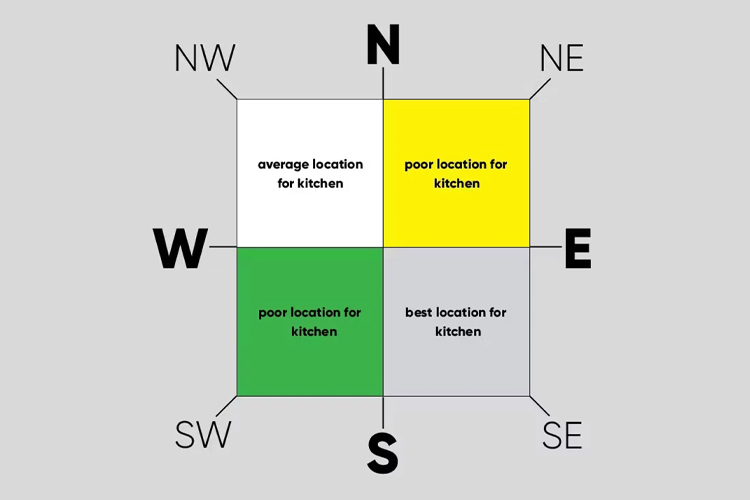
Ideal Direction for Kitchen
The South-East direction is considered the most auspicious location for a kitchen because it is governed by the fire element. Placing the kitchen in this direction aligns the cooking activity with natural energy flow, ensuring positivity and strength in the household.
If South-East is not available, the North-West direction can be considered as a secondary option. However, the North-East direction should be strictly avoided for kitchen placement because it is associated with water and spiritual energy, which conflicts with the fire element. Similarly, placing the kitchen in the center (Brahmasthan) of the house may disturb overall energy balance.
- South-East is the best direction for the kitchen
- North-West can be considered as a second option
- Avoid North-East direction for kitchen placement
- Do not place the kitchen at the center of the home
- Kitchen direction directly affects family health
Stove Placement and Cooking Direction
The cooking stove is the heart of the kitchen and must be positioned carefully. The stove should ideally be placed in the South-East part of the kitchen, and the person cooking should face East while preparing food. Facing East enhances positive vibrations and ensures good health and clarity of mind.
Avoid placing the stove directly in front of the kitchen entrance, as it may lead to financial instability. Also, ensure that the stove and sink are not placed directly opposite or adjacent without separation, as fire and water elements conflict with each other. Keeping some distance or placing a neutral element like a wooden partition between them helps maintain balance.
- Place the stove in the South-East corner of the kitchen
- Cook while facing the East direction
- Avoid placing the stove directly in front of the entrance
- Separate fire and water elements with a partition
Placement of Sink, Refrigerator & Storage
The water sink represents the water element and should ideally be placed in the North-East or North direction of the kitchen. This ensures harmony between fire and water energies. Placing the sink in the South-East may create emotional imbalance and health issues.
Heavy storage cabinets, grains, and the refrigerator should preferably be placed in the South or West directions to maintain stability. The South-West portion of the kitchen should remain heavier compared to the North-East portion. Overhead cabinets should not be too heavy in the North-East area, and a proper clutter-free arrangement enhances energy flow.
- Place the sink in the North or North-East direction
- Keep heavy storage in South or West zones
- Refrigerator is best placed in South-West or West
- Keep the North-East area light and clutter-free
Colors, Lighting & Ventilation
The choice of colors in the kitchen plays a major role in maintaining balance. Light shades like cream, light yellow, peach, and light orange are considered highly favorable. These colors represent warmth and positivity. Avoid dark colors such as black or deep blue, as they may suppress the fire element.
Proper ventilation is essential to remove smoke and negative energy. Windows in the East direction allow natural sunlight to purify the space. Exhaust fans should ideally be placed in the South-East or East wall. Adequate lighting ensures clarity and cleanliness throughout the kitchen area.
- Use light and warm colors like cream or light yellow
- Avoid black and dark blue shades in the kitchen
- Ensure natural sunlight through East-facing windows
- Place exhaust fans on South-East or East walls
Common Kitchen Vaastu Defects & Remedies
Many homes face Vaastu defects due to limited space or apartment layouts. If the kitchen is located in the North-East, certain remedies like placing a small copper strip, using light colors, and ensuring the stove faces East can help reduce negative effects.
If the stove and sink are too close, placing a wooden board between them can balance the elements. Keeping a bowl of rock salt in the kitchen and changing it regularly is believed to absorb negative energy. Regular cleaning, proper maintenance, and avoiding clutter are simple yet powerful remedies. Structural correction is always the most effective solution, but where that is not possible, these practical remedies can significantly reduce negative impact.
- Correct the stove direction whenever possible
- Use a wooden partition between the sink and stove
- Keep rock salt in the kitchen to absorb negativity
- Maintain daily cleanliness and avoid clutter