Preparation of Space and Personal Purification
The Havan procedure begins with proper preparation of the space and participants. The area chosen for the ritual should be clean, peaceful, and well-ventilated. A sacred atmosphere is created by cleaning the surroundings, placing the Havan Kund in the correct direction (usually east or north-east), and arranging all ritual materials systematically.
Personal purification is equally important. Participants bathe, wear clean clothes, and sit with a calm and focused mind. Holy water is sprinkled to purify the space, and initial prayers are offered to seek permission from divine energies before beginning the ceremony.
- Cleaning and organizing the ritual area
- Placement of Havan Kund
- Arrangement of sacred materials
- Personal cleansing and calmness
Sankalp (Setting the Sacred Intention)
Sankalp is one of the most important steps in the Havan procedure. It is the formal declaration of intention for performing the ritual. During Sankalp, the devotee clearly states their name, purpose of the Havan, date, and specific wishes or prayers.
This step aligns the ritual with focused spiritual energy. A clear intention strengthens the power of the ceremony and directs the vibrations created during mantra chanting toward a defined goal.
- Conscious intention setting
- Alignment of mind and ritual purpose
- Clarification of desired outcomes
- Commitment to sincerity and devotion
Invocation of Deities and Lighting of Sacred Fire
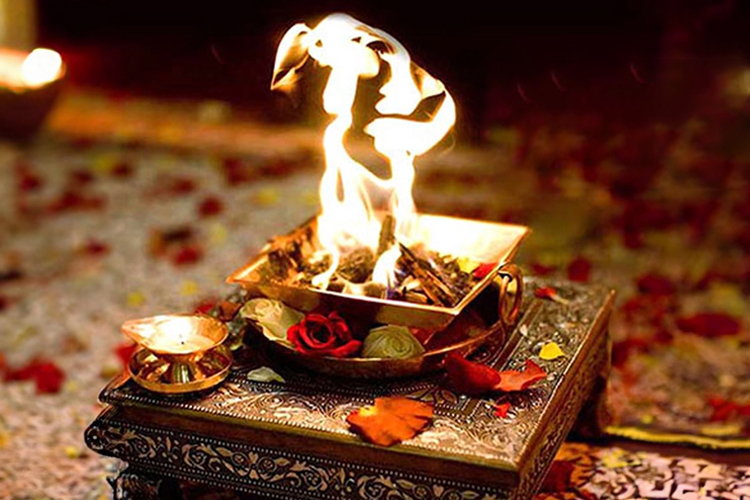
After Sankalp, the sacred fire is lit inside the Havan Kund using camphor and mango wood sticks. The fire is invoked as Agni Dev, the divine mediator who carries offerings to higher realms. In the Rigveda, Agni is praised as the first deity invoked in rituals, symbolizing the beginning of divine communication.
Mantras are chanted to invite divine energies and seek blessings. The lighting of the fire marks the spiritual activation of the ceremony and creates a powerful, sacred atmosphere.
- Lighting the fire with devotion
- Chanting Agni mantras
- Invoking divine presence
- Establishing sacred vibrations
Offering of Ghee and Sacred Samagri
Once the fire is properly established, offerings begin. Ghee (clarified butter) and Havan Samagri (a mixture of sacred herbs and grains) are offered into the fire while chanting specific mantras. After each offering, the word “Swaha” is recited, symbolizing surrender to divine forces.
Each offering represents letting go of negativity, ego, and obstacles. The fire transforms these offerings into subtle energy, which is believed to purify the environment and carry prayers to the divine.
- Ghee for purity and nourishment
- Herbal samagri for positive vibrations
- Rice and grains for abundance
- Specific items based on the purpose of Havan
Main Mantra Recitation and Focused Prayer
The central part of the Havan procedure is the continuous chanting of specific mantras depending on the purpose of the ritual. These may be peace mantras, prosperity mantras, health-related mantras, or planetary remedies. The repetition of sacred sounds creates rhythmic vibrations that influence both the mind and the surrounding environment.
Participants maintain focus, devotion, and gratitude throughout this phase. The collective chanting enhances the spiritual energy and strengthens the effectiveness of the ritual.
- Concentration and devotion
- Repetition of sacred mantras
- Harmonizing breath and sound
- Spiritual discipline and mindfulness
Purnahuti and Completion of the Ritual
The final stage of the Havan is called Purnahuti, which means the “complete offering.” A final, larger offering is made into the sacred fire as a symbol of total surrender and gratitude. Prayers are offered for universal peace and well-being.
After completion, participants perform Aarti and distribute prasad (blessed food). The ritual concludes with blessings and expressions of gratitude to divine energies.
- Final sacred offering (Purnahuti)
- Closing prayers for peace
- Aarti and gratitude
- Distribution of prasad