Introduction to Maturity Ages of Astrological Houses
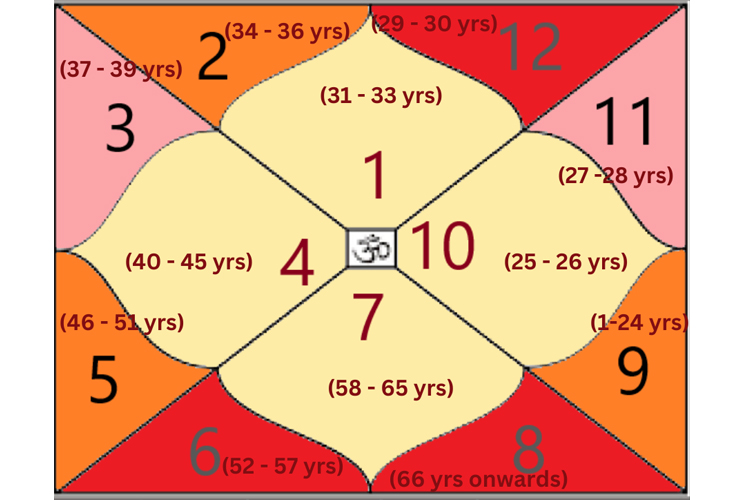
In Vedic astrology, every house (Bhava) in a birth chart represents a specific area of life such as personality, wealth, communication, home, children, career, marriage, and spirituality. While planets are believed to mature at certain ages, many astrologers also observe that houses themselves show stronger results during particular phases of life. These maturity ages indicate the time when the themes of a specific house become more active, noticeable, and karmically significant.
The concept of maturity age does not mean that a house is inactive before that time. Rather, it suggests that its full karmic expression unfolds gradually as a person gains experience and life responsibilities. Childhood emphasizes foundational houses, youth activates ambition and relationships, and later years awaken spiritual and transformative houses. Understanding house maturity helps in predicting life patterns and preparing for important turning points.
1st and 2nd Houses – Early Life Foundation (Ages 0–25)
The 1st house governs self-identity, physical body, personality, and overall life direction. The 2nd house represents family environment, speech, early education, and accumulated values. These houses are strongly activated during childhood and teenage years because they form the foundation of personal identity and upbringing.
During the early years, a person develops self-confidence, communication style, and moral values. The influence of family background and nutrition also shapes physical growth and mental conditioning. Any planetary placements here show visible results in childhood and early adulthood.
- Development of personality and self-image
- Formation of speech and communication habits
- Strong influence of family and upbringing
- Building financial values and a savings mindset
3rd and 4th Houses – Learning and Emotional Stability (Ages 16–30)
The 3rd house governs courage, skills, siblings, communication efforts, and short travels. The 4th house relates to mother, home, emotional peace, and property matters. These houses become more active during late teenage years and early adulthood when a person begins independent decision-making.
This stage of life involves education, skill development, competitive exams, and building emotional security. Many individuals move away from home for studies or career during this period. Emotional maturity and mental stability are tested strongly under these houses.
- Skill development and competitive spirit
- Relationship with siblings and close peers
- Education and academic growth
- Emotional security and home environment
5th and 6th Houses – Creativity and Responsibility (Ages 21–35)
The 5th house represents intelligence, romance, creativity, children, and speculative gains. The 6th house governs competition, service, debts, enemies, and health challenges. These houses mature during early career-building years when responsibilities increase significantly.
This is the phase of romantic relationships, marriage prospects, career competition, and managing debts or health discipline. The 6th house especially activates work routines and the need to overcome obstacles. Success during this period often depends on discipline and consistent effort.
- Romantic relationships and love life
- Career competition and job stability
- Health awareness and daily routine management
- Birth of children and parental responsibilities
7th and 8th Houses – Partnerships and Transformation (Ages 28–42)
The 7th house governs marriage, partnerships, and public dealings, while the 8th house represents sudden events, inheritance, joint finances, and deep transformation. These houses gain strength in mature adulthood when life becomes more interconnected with others.
Marriage, business partnerships, and shared responsibilities are key themes during this period. The 8th house often brings transformative experiences such as financial restructuring, psychological growth, or unexpected life changes. This period teaches adaptability and emotional depth.
- Marriage and long-term partnerships
- Business collaborations and joint ventures
- Sudden life transformations and changes
- Interest in occult or hidden knowledge
9th and 10th Houses – Dharma and Career Peak (Ages 35–55)
The 9th house represents higher knowledge, spirituality, father, and fortune. The 10th house governs career, authority, reputation, and achievements. These houses mature during midlife when individuals seek purpose, social recognition, and meaningful accomplishments.
Career growth reaches significant milestones, and individuals often gain leadership roles during this phase. At the same time, spiritual interests and philosophical thinking deepen considerably. This is a period of both material accomplishment and dharmic understanding.
- Career peak and authority roles
- Recognition and public image building
- Interest in spirituality and philosophy
- Blessings from mentors and father figures
11th and 12th Houses – Fulfillment and Liberation (Ages 50+)
The 11th house governs gains, social networks, and long-term desires. The 12th house represents expenditure, isolation, foreign lands, and spiritual liberation. These houses become stronger in later life when material goals gradually shift toward fulfillment and detachment.
This stage often brings financial stability, expansion of social circles, and realization of long-term ambitions. Simultaneously, there is a gradual movement toward spirituality, charity, and introspection. The 12th house especially guides the soul toward inner peace and liberation.
- Achievement of long-term goals and desires
- Expansion of social connections and networks
- Interest in charity and spiritual practices
- Foreign travel or settlement in later years