Introduction to the Sixteen Directions in Vaastu Shastra
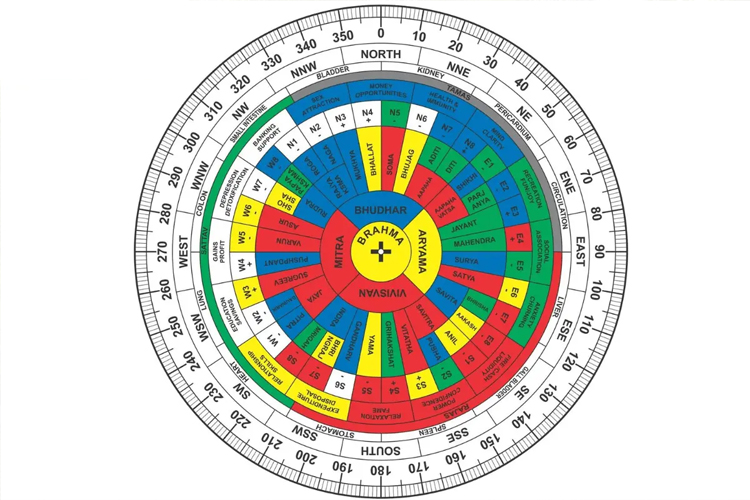
In Vaastu Shastra, directions play a vital role in maintaining harmony between the natural elements and the built environment. While many people are familiar with the eight primary directions, traditional Vaastu also recognizes sixteen directional divisions. These sixteen directions provide a more detailed understanding of spatial energy and help in planning homes, offices, temples, and commercial spaces with greater precision. Each direction is associated with specific cosmic forces, elements, and planetary influences that affect prosperity, health, relationships, and overall well-being.
The concept of sixteen directions allows Vaastu experts to determine the most suitable placement for different activities, rooms, and structural elements. By carefully analyzing these directions, one can ensure proper energy flow and avoid imbalances that may lead to obstacles or disturbances.
Understanding these directional energies helps create a balanced environment where positive vibrations circulate freely and support growth and stability.
The Eight Cardinal and Intercardinal Directions
The foundation of the sixteen-direction system begins with the eight principal directions. These include the four cardinal directions — North, South, East, and West — and the four intercardinal directions — North-East, South-East, South-West, and North-West. These eight directions form the primary energy framework in Vaastu Shastra and are associated with powerful natural forces.
Each of these directions is governed by a specific deity and element, which influences how the space should be used. For example, the North-East direction is associated with spirituality and wisdom, while the South-East direction is connected with fire and energy. When these directions are used appropriately in architectural planning, they help create balance and encourage positive outcomes in daily life.
- North represents growth, wealth, and opportunities
- East symbolizes sunlight, vitality, and new beginnings
- South is connected with strength, discipline, and stability
- West relates to support, fulfillment, and social connections
- North-East is considered the most sacred and spiritually powerful direction
The Eight Sub-Directions and Their Energetic Influence
Beyond the main eight directions, Vaastu further divides the compass into eight additional sub-directions, creating a total of sixteen. These sub-directions provide more precise guidance when designing structures and placing important rooms or utilities. The presence of these divisions allows Vaastu practitioners to interpret energy flows with greater accuracy.
Each sub-direction holds a subtle variation of the energy present in the primary direction. These variations influence specific aspects of life such as creativity, career growth, family harmony, and financial stability. When buildings are designed according to these sub-directional energies, they tend to experience fewer disturbances and a more balanced living environment.
- Sub-directions refine the interpretation of directional energies
- They help determine precise placement of rooms and entrances
- Each sub-direction supports a different aspect of life
- Correct utilization enhances prosperity and stability
Elemental Associations of the Sixteen Directions
Vaastu Shastra is closely connected with the five fundamental elements — Earth, Water, Fire, Air, and Space. Each of the sixteen directions is influenced by one or more of these elements, which determines how the space should be used. Proper balance among these elements ensures a healthy and harmonious environment.
For instance, water-related activities are best suited to the North or North-East directions, while fire-related elements such as kitchens are ideally placed in the South-East. The Earth element dominates the South-West direction, making it suitable for stability-oriented spaces like master bedrooms. Understanding the elemental relationship of each direction helps maintain balance in the structure.
- Water element dominates the North and North-East directions
- Fire element is strongly associated with the South-East
- Earth element provides stability in the South-West direction
- Air element influences movement in the North-West
Practical Application of Sixteen Directions in Architecture
The sixteen directional system is widely used in Vaastu-based architecture and planning. Architects and Vaastu consultants use these directional divisions when designing residential houses, temples, offices, factories, and commercial complexes. This detailed analysis ensures that each area of the building receives the most appropriate energy influence.
For example, entrances, kitchens, bedrooms, water sources, and workspaces are often positioned according to these directional guidelines. Such planning is believed to promote productivity, harmony, and prosperity. When structures are aligned with natural directional energies, occupants often experience greater comfort and mental peace.
- Directional analysis guides placement of entrances and main gates
- Kitchens are ideally located in fire-dominant directions
- Bedrooms are placed in stable and supportive directions
- Water tanks and wells are positioned in water-friendly zones
Benefits of Understanding the Significance of Sixteen Directions
Recognizing the importance of the sixteen directions allows individuals to design and organize spaces more effectively. It offers a deeper understanding of how environmental energies interact with human life and behavior. By aligning buildings with these directional principles, it becomes possible to create spaces that promote well-being, success, and positive relationships.
Proper directional planning also helps reduce negative influences caused by improper construction or layout. Whether for residential living or professional spaces, applying the knowledge of these directions can significantly enhance the quality of life and overall functionality of a structure.
- Helps create balanced and harmonious living spaces
- Enhances positive energy flow within the environment
- Supports prosperity, health, and personal growth
- Reduces the impact of structural and directional imbalances